
The Royal Borough needs £48.8m of Exceptional Financial Support this year and forecasts £111.9m in 2030/31. Its SEND deficit is heading for £17.5m.
The Royal Borough of Windsor and Maidenhead is on course to finish this year slightly under budget. It still needs £48.754m of Exceptional Financial Support to get there, and its own forecasts show that figure more than doubling to £111.911m a year by 2030/31.
Both sets of numbers were published by the council in the past fortnight. The year-to-date position went to Cabinet on 29 September. The long-range forecast came in a written answer to a resident’s question at full council on 22 September.
Exceptional Financial Support is government permission for a council to borrow, or use capital money, to pay for day-to-day services it cannot otherwise afford. It is not a grant. The council pays it back, with interest.
This year: a small underspend, propped up by borrowing
The Month 3 and 4 budget report forecasts a £1.321m underspend for 2026/27, as at the end of July (Cabinet report). That is down from £2.039m at Month 2.
The services themselves are forecast to overspend by £0.889m. Cheaper borrowing elsewhere covers it. Broken down by department:
| Department | Budget | Forecast over (under) spend |
|---|---|---|
| Adults and Health | £64.391m | £0.904m |
| Children’s Services | £42.470m | £0.820m |
| Place | £25.674m | (£0.546m) |
| Resources | £14.555m | (£0.042m) |
| Chief Executive’s | £2.170m | £0.024m |
| Non-service budgets | £32.739m | (£2.210m) |
The report gives these reasons:
- Adults: a £0.629m rise in the provision for bad debt, mostly money owed by the NHS Integrated Care Board that has been slow to arrive since NHS management in Berkshire, Surrey and Hampshire was reorganised. One new learning disability placement alone costs an estimated £6,500 a week.
- Children’s: grant money the council had expected to spread across the service must instead pay for new duties, including the Families First reforms and support for unaccompanied asylum-seeking children. Without that, the department would be £0.619m under budget, because fewer children need placements than assumed.
- Place: temporary accommodation costs are lower than budgeted, leisure income is higher and the waste contract is costing less.
- Borrowing: interest costs are forecast £1.403m under budget, because less capital money has been spent and recent loans were taken at lower rates than assumed.
The table in the same report shows how the books balance. Council tax, grants and other funding bring in £138.301m. Exceptional Financial Support supplies the other £48.754m.
Councillor Jones, Deputy Leader and Cabinet Member for Finance, presented the report. The draft minutes record her saying that investment “undertaken several months, and in some cases years earlier, were now delivering tangible financial benefits” (Cabinet, 29 September 2026). The report itself is blunter. It says Exceptional Financial Support “does not represent a sustainable long-term solution”, and that any underspend would let the council draw down less of it at year end.
The next five years
Ian Haggart, a Clewer and Dedworth East resident, asked full council for the council’s plan for Exceptional Financial Support and for its underlying debt up to 2030/31. The written reply was published with the agenda (written replies to public questions, item 5).
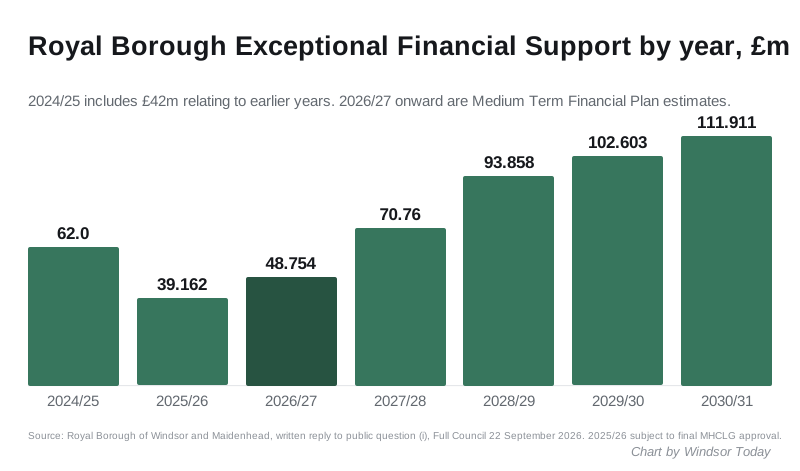
The reply gives these figures for Exceptional Financial Support:
- 2024/25: £62.000m, of which £42m related to earlier years
- 2025/26: £39.162m, subject to final approval from the Ministry of Housing, Communities and Local Government
- 2026/27: £48.754m, agreed in principle with the ministry
- 2027/28: £70.760m (estimate)
- 2028/29: £93.858m (estimate)
- 2029/30: £102.603m (estimate)
- 2030/31: £111.911m (estimate)
The estimates come from the Medium Term Financial Plan reported to Cabinet in June. The reply says they include a £30m cut in government funding from the Fair Funding review, and that everything after 2028/29 depends on future funding settlements.
The reply also gives the council’s Capital Financing Requirement, its underlying need to borrow:
| Date | Capital Financing Requirement |
|---|---|
| 31 March 2023 | £239.579m |
| 31 March 2024 | £211.854m |
| 31 March 2025 | £282.597m |
| 31 March 2026 | £315.000m (subject to audit) |
| 31 March 2027 | £367.286m (forecast) |
| 31 March 2028 | £431.774m (forecast) |
Those forecasts assume no change to government funding. The council has not forecast past 2028.
The cost of servicing that debt is rising too. In a separate written reply to Councillor Julian Sharpe, the council put financing costs at £25.8m in 2026/27, £32.3m in 2027/28 and £40m in 2028/29. The same answer says borrowing costs “were already unsustainable in 2023 and continues to be so” (printed draft minutes, Council 22 September 2026).
Asked by Councillor Kashmir Singh when the budget would balance without this support, the written answer was that “without a significant change to the councils’ funding, the council will be unable to balance its budget without exceptional financial support over the medium term”.
The council tax question
Another resident, Lars Swann, asked about a reported internal briefing that set out scenarios in which council tax could rise by about 42% over two years and debt could reach about £480m. The written reply did not confirm or deny those figures.
It said no decision has been taken on future council tax rises. The 2027/28 increase will be set at full council in March 2027. Anything after that will be for the councillors elected at the 2027 borough elections. It also said “increasing council tax over the coming years will need to be considered as one of the actions” to address the position.
The Royal Borough is already allowed to raise council tax above the usual 4.99% limit without a referendum. Our council tax bands page sets out this year’s 7.49% rise and what each band pays in every parish.
Schools: a separate £17.5m hole
The schools budget is ring-fenced and sits outside the figures above, but it has its own deficit. The Dedicated Schools Grant, which funds schools and special educational needs, is forecast to overspend by £8.877m this year. That would take the cumulative deficit to £17.501m by 31 March 2027.
Almost all of it comes from the High Needs Block, which pays for children with special educational needs and disabilities. The report says the borough was supporting 1,389 children and young people with Education, Health and Care Plans in July.
There may be relief. A new government High Needs Stability Grant would wipe out 90% of the deficit outstanding at 31 March 2026, if the government approves the borough’s SEND Reform Plan. The council submitted the plan in June and says it has had “positive initial feedback”. With that grant the deficit would fall to £9.739m in March 2027.
The report also notes that 11 of the 34 schools the council maintains ended last year in deficit, by £2.670m between them.
Building projects slipping
The capital programme, the money for buildings, roads and vehicles, is running well behind. The council now expects to spend £34.342m of a £67.233m budget this year. Forecast slippage into next year has risen from £12.378m at Month 2 to £31.152m.
The report blames the new waste collection vehicles and the Heatherwood Royal project, which will now mostly be paid for in 2027/28, and delays to the NHS-led health hub programme. It also lists delays to street lighting upgrades, the Bus Service Improvement Plan and the Great Park Link.
Cabinet did approve one small extra: £0.320m from reserves for road markings, street and footway works and a trial of new road repair technology.
What it means for you
- This year’s services are funded. The forecast underspend means no sudden mid-year cuts are signalled in the report.
- Next year’s council tax is not yet set. The council says it decides the 2027/28 rise in March 2027, and has said rises “will need to be considered”.
- Parents of children with special educational needs: the deficit does not change what the council must provide under an Education, Health and Care Plan. If the SEND Reform Plan is approved, the report expects the High Needs Stability Grant to be paid this autumn.
- To ask your own question: residents can put written questions to full council. Both answers quoted here came from that route, and the replies are published with the agenda.
Sources
- Royal Borough of Windsor and Maidenhead, 2026/27 Month 3 and 4 Budget Management Report, Cabinet, 29 September 2026, and Appendix E, Reserves.
- Royal Borough of Windsor and Maidenhead, Cabinet, 29 September 2026: agenda, decisions and printed draft minutes.
- Royal Borough of Windsor and Maidenhead, Written replies to public questions, full council, 22 September 2026.
- Royal Borough of Windsor and Maidenhead, Council, 22 September 2026: agenda, written replies and printed draft minutes.
Have your say