

The DfE has approved the Royal Borough's SEND reform plan, releasing about £7.76m to clear 90% of its schools deficit. This year's overspend goes on.
The Department for Education has approved the Royal Borough’s plan for special educational needs, and with it a grant of about £7.76m. The money wipes out 90% of the deficit the borough has built up on its schools budget.
The council announced the approval on Friday 9 October. It puts the High Needs Stability Grant at an estimated £7,761,724.
That settles a question left open a fortnight ago. When we reported the council’s £48.8m Exceptional Financial Support on 6 October, the grant depended on this approval.
What the grant covers, and what it does not
The grant pays off old debt. It does not stop new overspending.
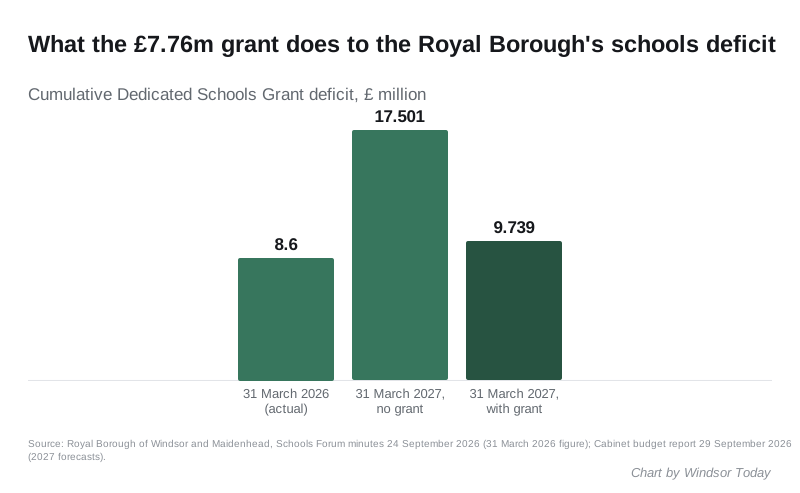
At the end of March 2026 the Dedicated Schools Grant, the ring-fenced budget for schools and special needs, had a cumulative deficit of £8.6m. Finance officers gave that figure to the borough’s Schools Forum on 24 September, according to the draft minutes. Most of it came from an overspend of about £4.7m on the High Needs Block last year. That block pays for children with special educational needs and disabilities (SEND).
The grant clears 90% of that £8.6m. Officers told the forum a successful bid would leave about £1.2m.
This year’s overspend is a separate problem. The Cabinet budget report of 29 September forecasts the schools budget overspending by £8.877m in 2026/27. Its forecasts for the deficit at 31 March 2027 are:
- £17.501m without the grant
- £9.739m with it
Officers explained why at the forum. The High Needs Block got no cash increase this year, while demand kept rising. The forum minutes record a forecast overspend of £9.1m, a little above the Cabinet report’s figure.
The council was supporting 1,389 children and young people with Education, Health and Care Plans in July, according to the Cabinet report.
What the plan promises
The plan runs for three years. The council says it will:
- include more children with SEND in mainstream schools
- step in earlier, before needs escalate
- build up staff capacity in schools and services
- bring health and education specialists into mainstream schools, under a national model called Experts at Hand
- keep working with SEND Voices RBWM, the parent carer forum
It also builds on the existing Early Years SEND inclusion service.
The council’s announcement calls the plan a “clear and coherent” roadmap, in quotation marks, but does not say who used the phrase. The DfE’s own assessment has not been published.
Cllr Amy Tisi, cabinet member for children’s services and education, called the approval “an important milestone”.
What it means for you
- If your child has an EHCP, nothing in the support the council must provide changes. The deficit and the grant sit in the council’s accounts, not in the plan.
- If you pay council tax: the schools budget is ring-fenced, so this grant does not reduce the separate Exceptional Financial Support the council needs for its day-to-day budget.
- If you are a school governor or head: the next Schools Forum is on 26 November 2026. Officers said the forum should expect regular reports on how any grant money is allocated.
- To have a say in SEND services, SEND Voices RBWM is the parent carer forum the council names in the plan.
Sources
- Royal Borough of Windsor and Maidenhead, Department for Education gives greenlight to Royal Borough’s Local Area Partnerships SEND reform plan, 9 October 2026.
- Royal Borough of Windsor and Maidenhead, Schools Forum, 24 September 2026: printed draft minutes, published 6 October 2026.
- Royal Borough of Windsor and Maidenhead, 2026/27 Month 3 and 4 Budget Management Report, Cabinet, 29 September 2026.
Have your say